
I post daily, but deliver to your inbox every Sunday. Browse past newsletters HERE. Book Rich. Bring the speed of Asia to your next event HERE
Read me first
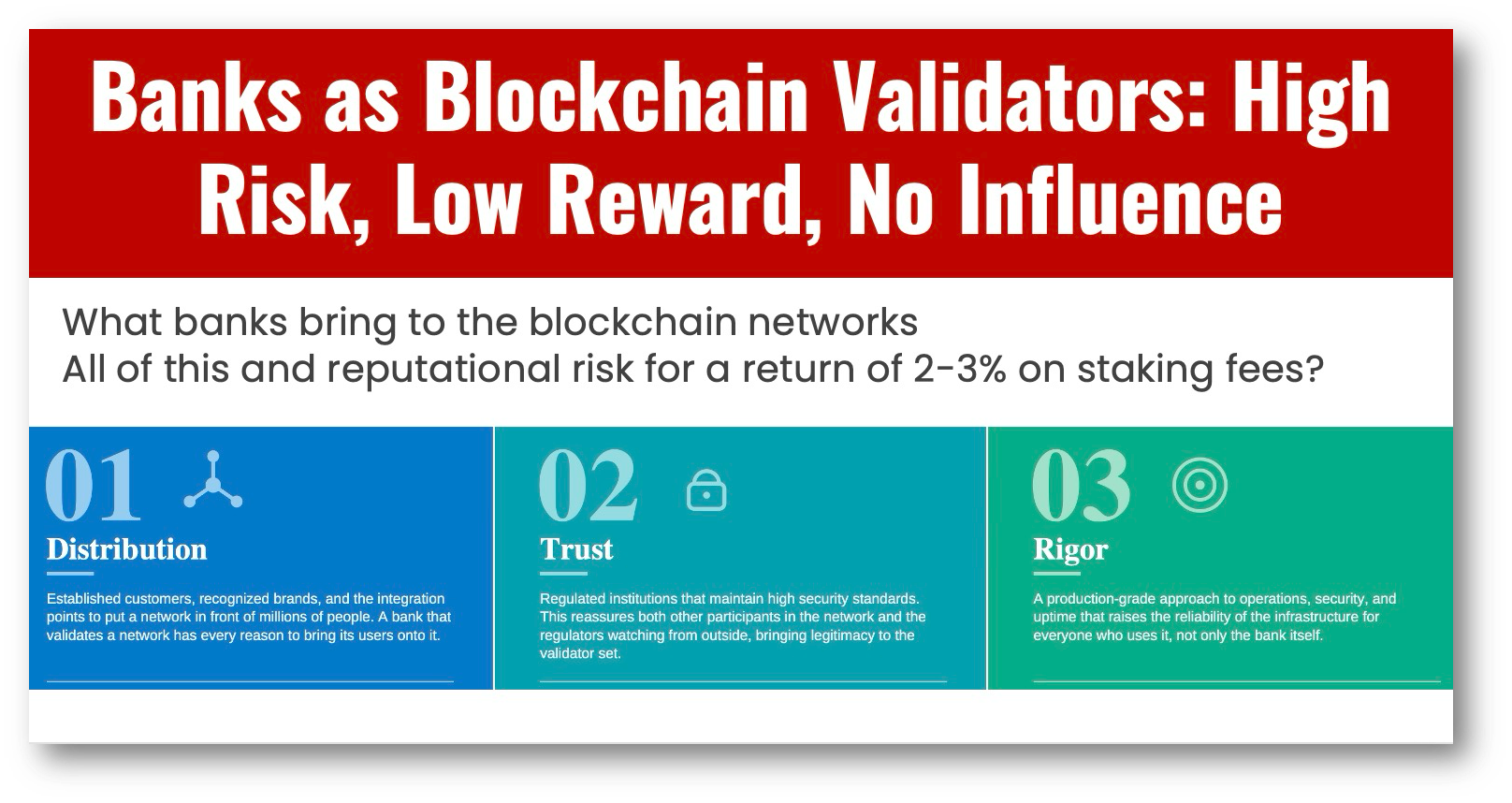
Banks could become validators on public blockchains, but to what end, as they will have almost no influence on how a blockchain is run and managed.
This paper from Ubyx and stakeFi is a great read, but with respect to the authors, they heavily oversell the influence of banks as validators on public blockchains.
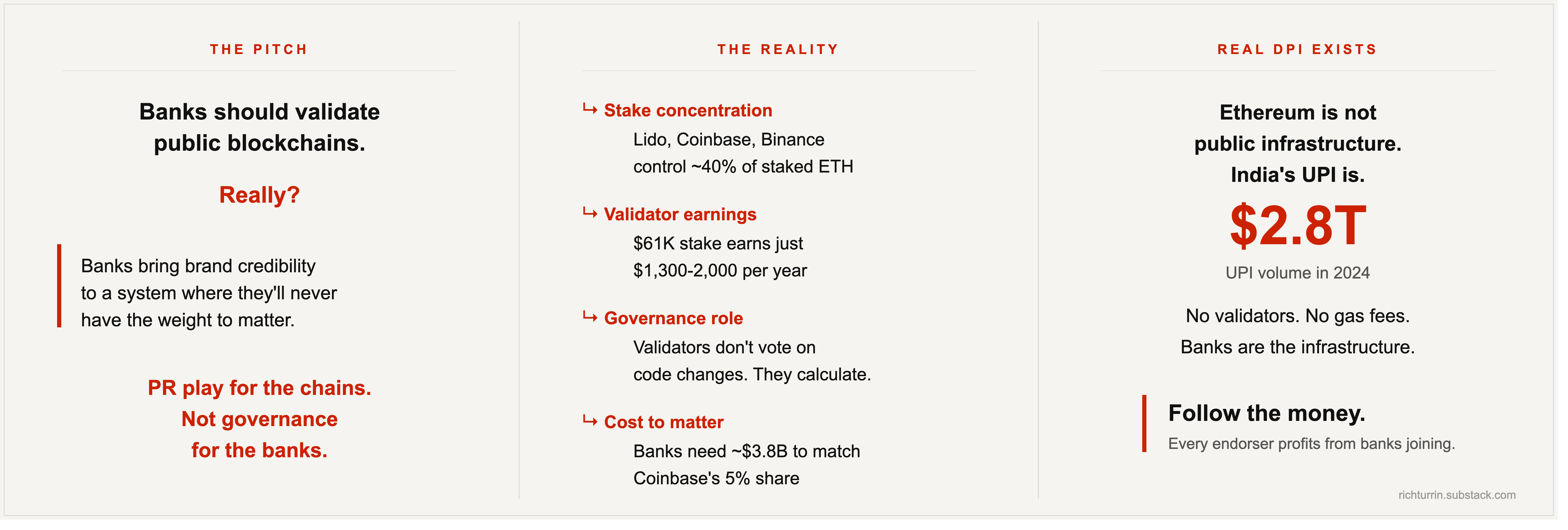
The paper is effectively asking banks to bring their brand credibility to a system where they’ll never have the economic weight to matter. It’s a PR play for the blockchains, not a governance play for the banks.
Yes, banks were discouraged from participating in public blockchain, and the paper is unquestionably right about that. Banks could consider becoming validators as a learning exercise but don’t mistake it for actually having influence.
It is also revisionist to not acknowledge that the early days of blockchain and digital assets were a circus, and that banks stayed away from public blockchains due to real concerns over liability and reputation. To this day, the question of a bank’s liability in validating a sanctioned payment on a public blockchain remains unanswered.
What Does a Validator Actually Do?
On Ethereum, an individual validators just attest that they agree with everyone else’s calculations, which happens every 6.4 minutes. They also get to propose a block roughly once every four to five months, and every five to six years may join in sync committee duty to verify the chain.
