
Navigating AI Ethics, Where Angels Fear to Tread
Keeping AI compliant? Simple. Keeping it ethical? Tough.
This is my daily post. I write daily but send my newsletter to your email only on Sundays. Go HERE to see my past newsletters.
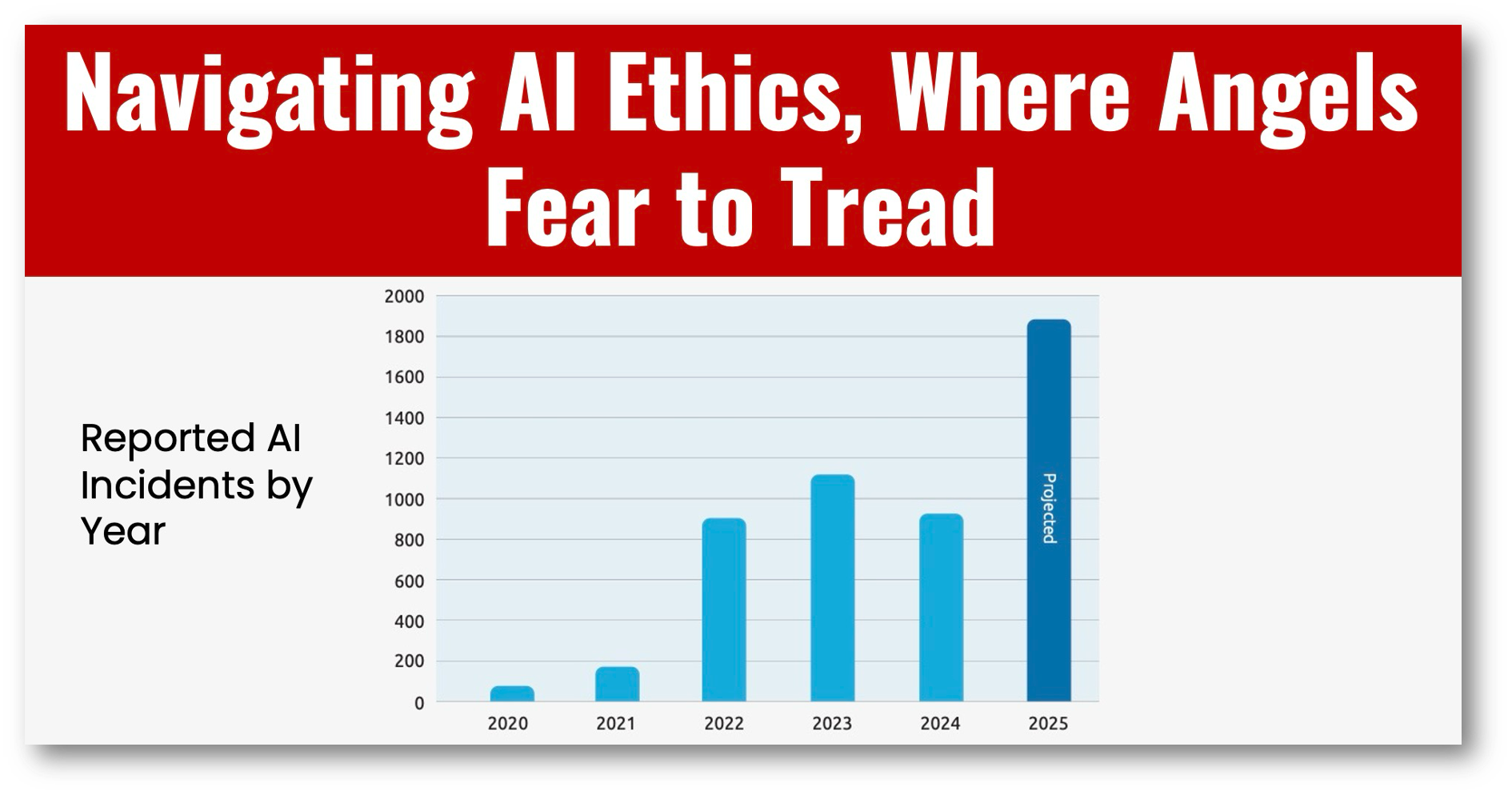
Brace yourself for the bank or fintech CEOs who will soon say: “My company’s AI broke no laws.” At the same time, their AI violated every ethical rule in the book.
Think it won’t happen in our new digital arena? Look to Apple giving women using their new credit card significantly lower credit limits than their male partners, for no good reason.
Or, look to Robinhood, whose gamified interface exploited users by generating FOMO and actually made putting stocks into the buy basket easier than removing them.
Compound the natural tendency of financial services professionals to stack the deck in their favor and the lack of meaningful AI regulation, and we have a recipe for AI ethics violations.
That’s why Capgemini’s “guide to implementing AI ethics governance” is so important.
Ethics are much more complex and go beyond any regulations on AI or financial services.
They speak to who we are as both humans in our corporate role and what level of ethics the companies we support are held to.
They are key not just for the AIs our companies may build, but those we consume.
Think of how key this is for an AI agent that interacts with multiple AIs.
This isn’t going to be easy. A recent study showed that 60% of organizations hadn’t even identified key AI governance stakeholders or owners.
Getting corporations to focus on AI ethics adds another layer of governance that will further challenge most corporate responsible AI programs.
If banks need inspiration to take AI ethics more seriously, they should just look to banking’s “greatest hits” of non-digital ethics fails:
-TD Bank’s $4 billion penalty for money laundering,
-Wells Fargo’s $3.7 billion+ in fines for creating millions of unauthorized accounts,
-Goldman Sach’s $2.9 billion over the 1MDB scandal.
Now imagine AI making each of these scams even more virulent and productive!
My point is that AIs in banking will adopt the ethics of their human creators, where we are already seeing that banks are fatally flawed.
Who knows, just maybe AI can do better?
👉AI Ethics an Integral Part of “Responsible AI.”
🔹 AI ethicists are not the moral arbiters for the organization. Ultimate responsibility for AI ethics must sit with the executive team, just as with any other business outcomes. However, the AI ethicist plays a key role in asking the right questions around AI implementation and clarifying risk ownership.
🔹 AI Ethics is a team sport. The AI ethicist must ensure that diverse and inclusive perspectives are considered before decisions are made. This includes cultural, educational, and experiential diversity. For example, Capgemini’s AI Futures Lab’s ethics team includes a classically trained philosopher as well as technologists and business experts.
🔹 Ethical AI is essential for every organization. Even if you aren’t deploying AI directly, your partners, suppliers, or customers are likely to be doing so. Like data protection, AI ethics must be embedded across the organization. Assuming executive buy-in, the next step is to define an operating model for AI ethics that functions at every level of the organization.
🔹 Establishing the right AI ethics principles. Ethics principles for AI provide a mechanism for managing and assigning ownership of AI risk within the organization. According to a Gartner report from October 2024, the five most common principles are: human-centric and socially beneficial, fair, explainable and transparent, secure and safe, and accountable.
HAND CURATED FOR YOU
🚀 Every week I scan thousands of articles to find only the best and most valuable for you. Subscribe to get my expertly curated news straight to your inbox each week. Free is good but paid is better.

If you know someone who would like this newsletter, please share it with them and help grow our Asia, CBDC, and AI aficionados community!
